
The Grief Inside the Wound: Why Healing from Complex Trauma Feels Like Loss
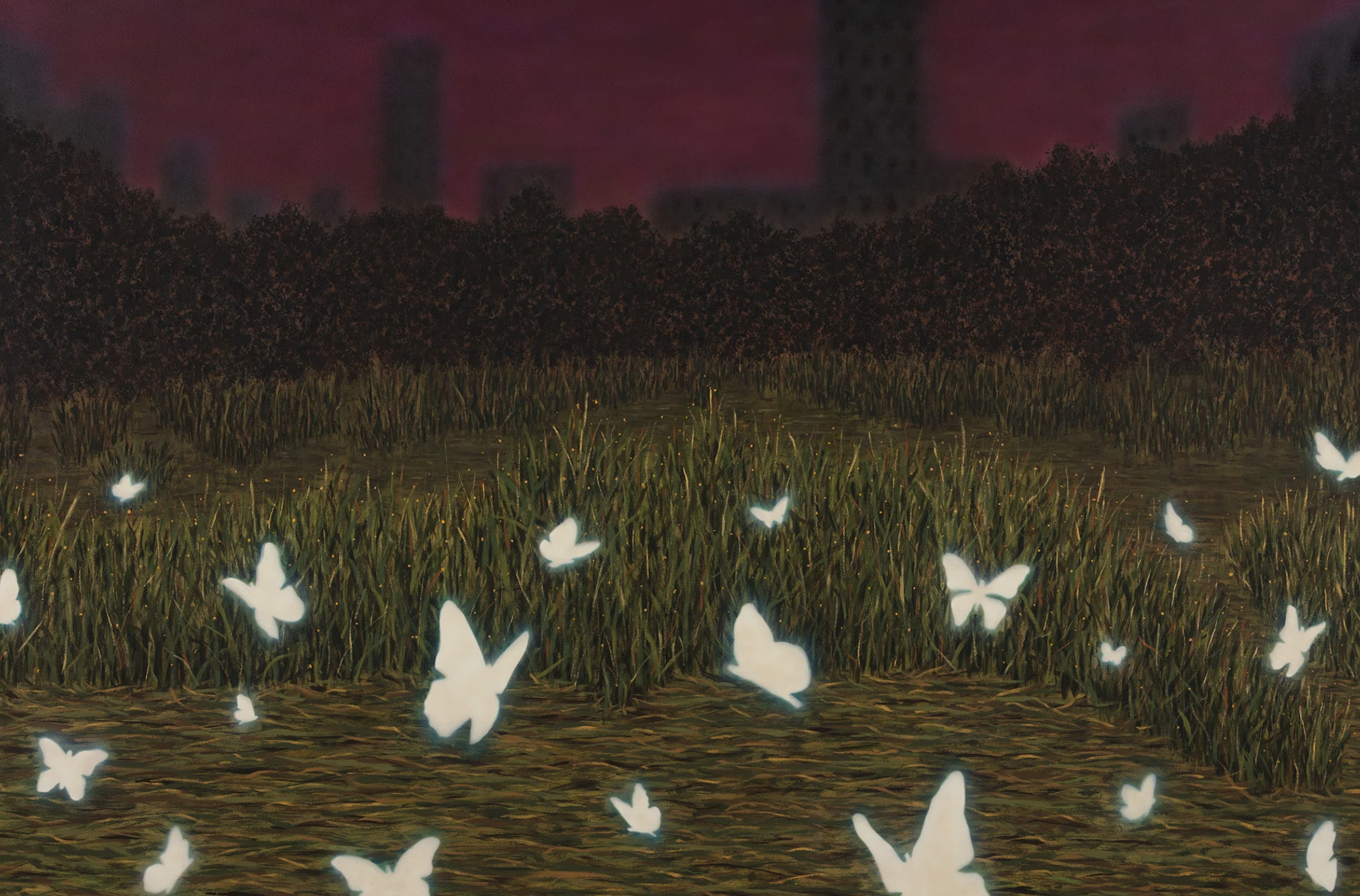
Painting by Sung Hwa Kim
Nobody told you that healing would feel like grief.
You expected relief. Maybe some hard work, some difficult sessions, some moments of discomfort. But grief — the kind that sits in your chest, the kind that arrives without warning in the middle of an ordinary Tuesday — that wasn't part of the picture.
And yet here you are. Doing the work. Reading the books. Showing up to therapy. And somehow feeling more sad, not less.
If that's where you are right now, I want you to know something before we go any further: you are not doing it wrong. What you're feeling has a name. And it makes complete sense.
The Grief That Doesn't Have a Grave
Most of us understand grief as a response to loss. Someone dies. A relationship ends. Something we had is taken away. The grief is proportionate to what was there.
But complex trauma introduces a different kind of grief — one that's harder to locate and even harder to explain to the people around you.
It's the grief of what was never there.
The childhood that was supposed to feel safe and didn't. The parent who was supposed to show up and couldn't. The version of yourself that was supposed to develop freely and instead learned to shrink, to manage, to disappear. The needs that were supposed to be met and were silenced so early you stopped knowing they existed.
You can't point to a single moment. You can't name a clear before and after. There's no funeral, no casserole from the neighbors, no socially sanctioned time to fall apart. And yet the loss is real — profound, accumulated, and often completely unnamed.
This is what I call the grief inside the wound. It's not separate from the trauma. It lives inside it.
Why It Shows Up During Healing
One of the most disorienting things about complex trauma recovery is that the grief often gets louder as you get safer.
This seems counterintuitive. Shouldn't things feel better as you heal? Shouldn't the sadness lift as you do the work?
Sometimes, yes. But often — especially in the early and middle stages of trauma work — the opposite happens. And there's a reason for it.
When you were living inside the trauma, your nervous system was in survival mode. There wasn't space for grief. Grief requires some safety — it's the emotional response that comes when the threat has passed enough that you can finally begin to feel what happened. Animals in the wild don't grieve mid-chase. They grieve when they're finally still.
So as your nervous system starts to settle — as therapy creates even a small pocket of safety — the feelings that got pushed aside in survival mode start to surface. The grief that had nowhere to go finally has somewhere to land.
And it can feel overwhelming. Like something is wrong. Like you're getting worse, not better.
You're not getting worse. You're finally getting safe enough to feel.
What You're Actually Grieving
If you have complex trauma, the grief you're carrying probably isn't just one thing. It's accumulated. Layered. And it often includes losses that have never been named out loud.
You might be grieving the childhood you deserved but didn't have. Not the dramatic version — not necessarily abuse or neglect in obvious forms — but the ordinary things. A parent who was emotionally present. A home where you could be a child. The freedom to be messy and imperfect and still completely loved.
You might be grieving the version of yourself that didn't make it through. The child who was curious, or loud, or tender, or big — who learned to make themselves smaller to stay safe. Who stopped asking for things. Who learned to need less.
You might be grieving the relationships you couldn't have — because the template you were given for relationship was distorted, and that shaped every connection that came after. The intimacy that always felt slightly out of reach. The trust that never quite arrived.
You might be grieving time. The years spent surviving instead of living. The decade of your twenties organized around managing something that should never have been yours to manage. The version of your life that might have been.
And underneath all of it — often — you're grieving the parent you needed and didn't have. Not necessarily in a dramatic way. Sometimes just the quiet, persistent ache of never quite feeling fully held by the person who was supposed to hold you first.
These are real losses. They deserve real grief. Even though there's no grave. Even though nobody organized a memorial. Even though the people around you might not understand why you're sad about something that happened so long ago.
The Body Holds It Too
Complex trauma grief doesn't just live in thoughts or memories. It lives in the body.
It might be the tightness in your chest that arrives without warning. The heaviness that settles in your shoulders after certain conversations. The exhaustion that feels different from tiredness — deeper, more elemental, like something is being carried that your body has been carrying for a very long time.
Sometimes it arrives as physical sensation before there's any cognitive awareness that something is happening. You'll notice you're bracing, or holding your breath, or that your throat has closed slightly — and only a moment later will you understand that you were just reminded of something. That the body got there first.
This is the nervous system's way of holding what the mind hasn't yet been able to process. The grief that doesn't have words yet. The loss that lives in the muscles and the chest and the gut, waiting for enough safety to come up and be felt.
What Helps
I want to be careful here — because the answer isn't simple, and anyone who offers you a quick fix for this kind of grief probably doesn't understand it.
What helps is not rushing it. This grief has often been waiting for years, sometimes decades. It doesn't resolve in one session or one weekend or one breakthrough moment. It moves slowly, in layers, and it needs to be met with patience — most of all from yourself.
What helps is naming it. Out loud, in therapy, in writing, or even just to yourself. The grief that goes unnamed tends to live in the body as anxiety, as numbness, as a low-level sadness that never quite lifts. When it gets named — when you can say "I'm grieving the childhood I deserved" or "I'm grieving the version of myself that didn't survive intact" — something shifts. Not immediately resolved, but recognized. And recognition is the beginning.
What helps is being witnessed. Not fixed, not reframed, not redirected to gratitude. Just — someone sitting with you in it. A therapist, a trusted person, a group of people who know what you're talking about without you having to explain it. Grief moves through community. It was never supposed to be carried alone.
And what helps — slowly, over time — is understanding that this grief is not a sign that something is wrong with you. It's a sign that something was wrong with what happened to you. And that you are finally safe enough to feel the weight of it.
That's not failure. That's healing.
You Don't Have to Be Over It
One of the cruelest myths about trauma recovery is that the goal is to be over it. To reach a point where the past no longer affects you. To stop feeling the grief.
But grief for what you never had doesn't work that way. It doesn't have a finish line. It changes — it softens, it integrates, it stops running your life from the background — but it doesn't disappear. And asking it to disappear is asking yourself to pretend the loss wasn't real.
The goal isn't to stop grieving. The goal is to grieve it well enough that it stops running in the background — and you get to live in the foreground.
That's the work. Slow, nonlinear, often uncomfortable, and completely worth it.
If any of this landed somewhere in you — if you've been carrying this quietly, without quite having words for it — I want you to know that you don't have to figure it out alone.
This is the work I do. Not just professionally, but because I know this territory from the inside. The grief that doesn't have a grave. The loss that nobody organized a memorial for. The part of you that's been waiting for enough safety to finally be felt.
If you're ready to start — or even just curious about what it might look like to have a space for this — I'd love to hear from you.
You can reach me at stephbayantherapy.com or contact me here. I work with individuals in the Hudson Valley and virtually in New York and New Jersey, and I run grief groups specifically for people navigating this kind of loss.
Whatever brought you here — I'm glad you found this.
